
Landscape Lighting and Irrigation Should Share One Underground Map
Plan lighting cable and sprinkler pipe together before either trench disappears
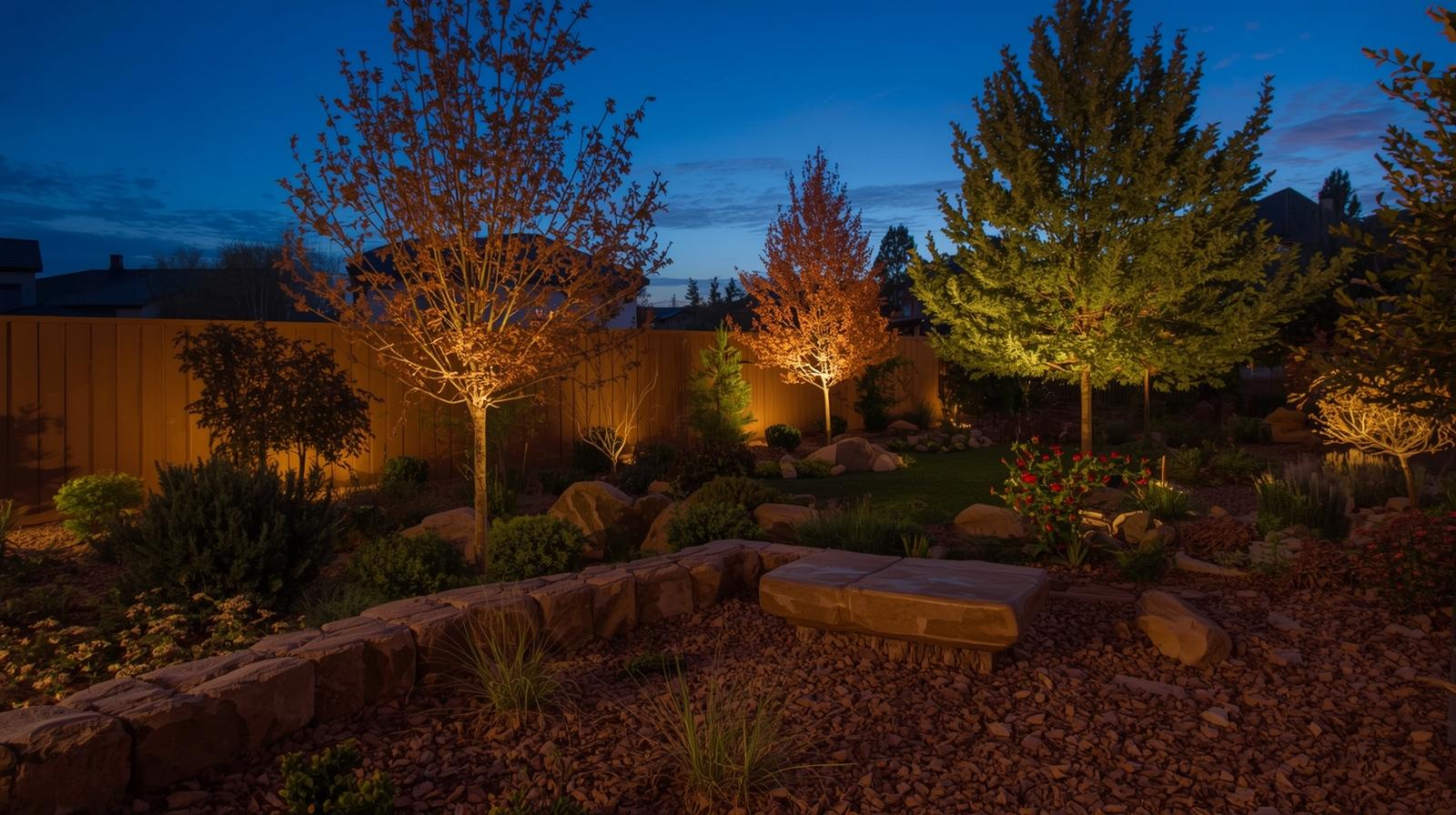
Landscape lighting and irrigation appear to serve opposite parts of the day. Sprinklers operate when the yard needs water. Lighting operates after the sun goes down. Underground, both systems occupy the same property.
Irrigation pipe, valve wires, lighting cable, drainage, sleeves, roots, utility lines, and future construction routes can cross each other. NationScapes provides both landscape-lighting installation and complete irrigation design and repair, making a shared underground map a practical part of planning the two systems together. The map becomes especially valuable several years later when one system needs repair.
Start with every known buried system
Before new trenching, collect available information about the irrigation main line, lateral pipes, valve wires, valve boxes, lighting cable, transformer, electrical conduit, drainage pipe, downspout extensions, gas, water, sewer, communication lines, invisible fence, pool equipment, well or septic, sleeves beneath hardscape, and previous construction.
Public utility marking may not identify every privately installed line. Provide old plans, invoices, photographs, and knowledge from previous projects. We can map the portions of our own work included in the approved scope, but we should not be expected to know the location of every undocumented private line automatically. Properties in Denver and surrounding towns often accumulate several generations of underground work.
Put the transformer and controller on the plan
The lighting transformer and irrigation controller are above-ground components connected to underground systems. Their locations affect power, access, wiring distance, service, visibility, weather exposure, future additions, landscape screening, house penetrations, and manual operation.
The map should show the lighting transformer, irrigation controller, backflow equipment, irrigation shutoff, main electrical panel where relevant, exterior outlets, sensors, valve boxes, lighting zones, and irrigation zones. Do not hide the transformer or controller so thoroughly that ordinary service requires removing shrubs or stored equipment.
Coordinate the trench routes
Lighting cable and irrigation pipe do not always require the same trench depth or route. They can still be planned together. Before work begins, review which system is installed first, where routes cross, separation, sleeves, valve-box access, fixture locations, head locations, tree roots, hardscape, drainage, future projects, and repair access.
The design team may choose parallel routes in some areas and separate paths in others. The decision should be recorded rather than left entirely to whichever crew begins trenching first. When a new system is being designed from scratch, our custom sprinkler design process already maps buildings, beds, slopes, and sun before pipe goes in, and lighting should join that same drawing set.
Path lights should not block sprinkler coverage
A path light can sit directly in the spray arc of a sprinkler. The irrigation can leave mineral residue on the fixture, redirect water, or create a constantly wet electrical component area. The lighting plan should be reviewed against spray heads, rotor paths, drip zones, overspray, mowing route, snow removal, bed edges, plant growth, and walkway clearance.
We design lighting for pathways and entry points while also selecting sprinkler heads around coverage needs. The two plans should be overlaid before final fixture placement.
Sprinkler heads should not be hidden behind lighting features
The conflict works in both directions. A decorative boulder, fixture, transformer screen, or new planting installed for the lighting design can block an existing head. After the lighting concept is approved, run every irrigation zone and check spray blocked by fixture, water striking fixture, access to nozzles, rotor clearance, valve-box access, drip emitters, new plant watering, cable route, head relocation, and controller changes.
When a head must move, update the irrigation plan before the lighting installation is closed out. That update belongs with the installation record so the next repair technician is not guessing.
Trees affect both systems
Landscape lighting often highlights trees. Irrigation pipe and lighting cable may both pass near the root zone. The plan should consider trunk growth, major roots, existing tree health, uplighting position, mowing, mulch, irrigation delivery, future canopy, snow, fixture adjustment, cable slack or route, tree removal possibility, and service access.
We offer tree and shrub care along with lighting and sprinklers. Where significant root conflicts exist, another tree-care evaluation may be appropriate before trenching.
Sleeves should be installed before patios and walks close the route
A future light, irrigation zone, or repair line may need to cross hardscape. The easiest time to install a sleeve is before the surface is finished. Map planned crossings beneath patio, walk, driveway, retaining wall, outdoor kitchen, steps, pool deck, gate, and courtyard.
Label both ends of the sleeve and photograph them before they are buried or concealed. A sleeve with no location record can be almost as difficult to use as no sleeve at all.
Repairs should begin with the map
A technician responding to one dark lighting zone should know whether irrigation pipe runs beside the cable. An irrigation technician locating a valve should know whether lighting cable crosses the area. The service record should include date, system affected, area, original route, excavation, repair, changed route, new component, photographs, updated map, and follow-up.
When the map is not updated, the next repair begins with outdated information. That is how a simple head replacement turns into a second excavation through unfinished cable.
Seasonal service can verify both systems visually
We perform irrigation startups, maintenance checks, and blowouts in addition to lighting work. Those visits create opportunities to notice visible conflicts such as a sprinkler hitting a light, a fixture leaning after freeze-thaw, a valve box blocked by planting, cable exposed at the surface, a head buried after bed work, transformer access blocked, a light obscured by shrub growth, or an irrigation repair disturbing cable.
The irrigation technician may not be assigned to repair lighting during that visit. The observation should still be reported through the shared property account. Annual maintenance programs and scheduled checks are natural places to catch those conflicts early.
The nighttime walkthrough should happen after irrigation is tested
Review the finished lighting after dark. Also verify the irrigation during daylight. The final handoff should confirm path visibility, entry lighting, tree and architecture accents, glare, neighbor-facing aim, timer or control, transformer, and fixture locations for lighting. For irrigation, confirm head coverage, overspray, fixture conflicts, valve access, updated zones, controller, sleeves, and repair locations.
A project can look excellent at night while creating a watering problem visible only the next morning.
Keep one master property plan
The final map should include the house and structures, hardscape, irrigation routes, valves, heads, lighting cable, fixtures, transformer, sleeves, drainage, trees, known utilities, future phases, date, and legend. Save both a digital copy and a printable copy.
Browse the broader menu under services and related posts on the blog. We provide landscape-lighting design, sprinkler design and installation, irrigation repair, lawn care, tree and shrub work, and seasonal landscape service throughout Greater Denver. Call 303-934-9130 or use the contact page to coordinate both plans before the trenches disappear.
Need One Map for Lighting and Irrigation?
Coordinate both systems across Greater Denver. Free quotes.